
The essentials at a glance
- Best use: a live event with an audience that already trusts the mission and can respond to a specific need.
- Best timing: a short, high-energy appeal of about 10-15 minutes after the room is emotionally warmed up.
- Best structure: 6-10 giving tiers, a clear impact statement, and a visible goal.
- Best team: an emcee, room spotters, pledge recorders, and someone who handles follow-up.
- Best results: when a few lead donors pre-commit before the room hears the first number.
What a live appeal is really asking people to do
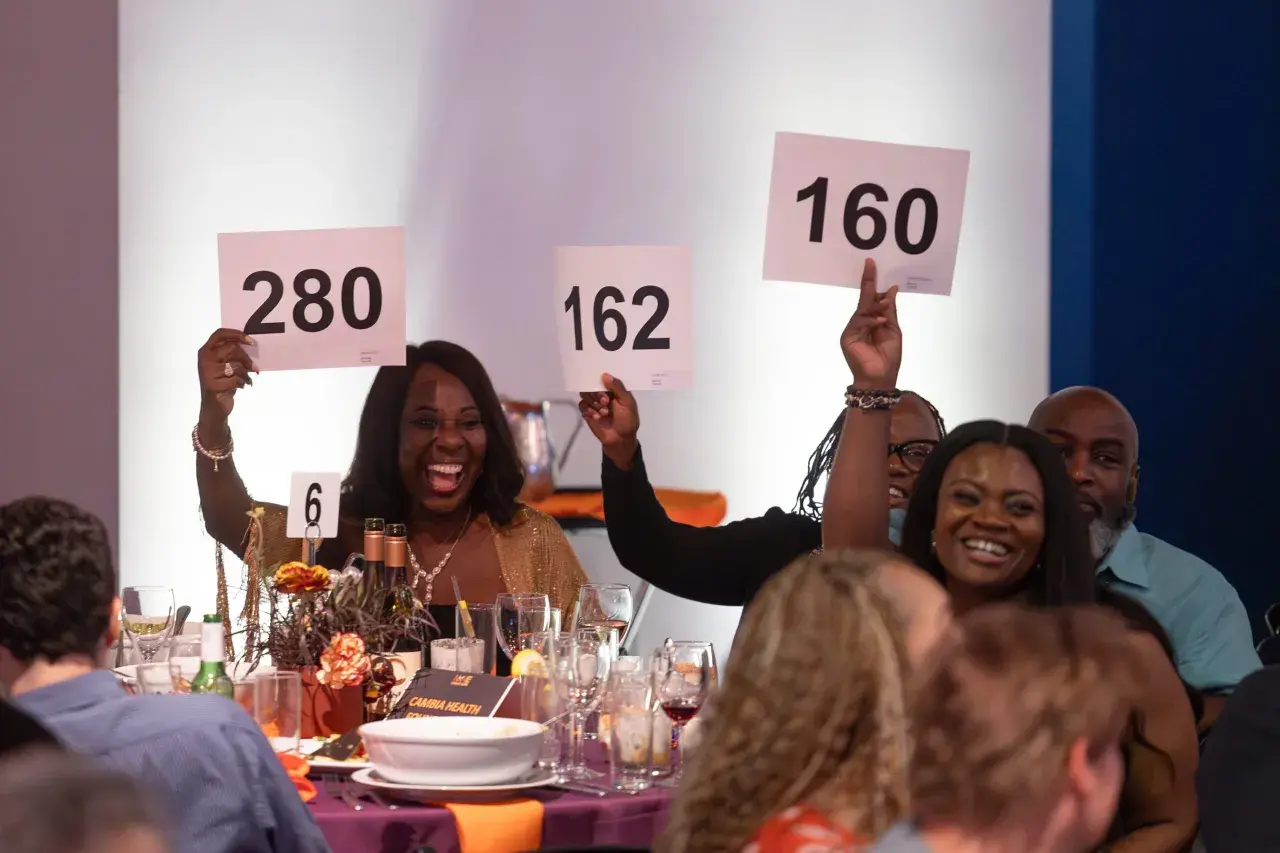
I think of this format as a direct invitation to fund one mission-critical need together. Guests are not bidding for an item; they are pledging a gift in the room, usually by raising a paddle or a numbered card when the emcee calls out a tier. That difference matters, because the emotional trigger is generosity and belonging, not competition.
The strongest appeals are concrete. “Help us fund 20 shelter nights” gives people something they can picture, while “support our mission” is too abstract to move a room. If your event is built around a gala, benefit dinner, school auction, or donor celebration, this kind of live appeal usually belongs near the emotional peak of the program, not at the beginning when people are still settling in. From there, the next question is how the room moment actually unfolds without feeling rushed or awkward.

How the room moment works from the first ask to the final tally
The mechanics are simple, but the pacing is where most teams win or lose. The emcee opens with a short story or video, names the need in one sentence, and then starts at the top of the giving ladder. I usually want the first number to feel ambitious enough to anchor the room, but not so high that it sounds imaginary. That anchoring effect, the way the first number frames every number after it, is one of the quiet reasons this format works.
A smooth live appeal usually takes 10-15 minutes. Longer than that, and the room starts to fragment; shorter than that, and you may not give people enough time to decide. The best flow looks like this:
- State the need and show the impact.
- Announce the goal and the top tier.
- Pause long enough for people to decide.
- Move down the ladder in clear steps.
- Record every pledge in real time.
- Close with a direct thank-you and a visible total.
If you are running a hybrid event, the same moment can work through QR codes, text-to-give links, or a mobile pledge page. The technology should reduce friction, not add theater, which is why I prefer a simple participation path over a crowded screen of options. Once the room flow is clear, you can prepare the people and tools that keep the moment from unraveling.
What to prepare before anyone takes the stage
The best live appeals look effortless because the backstage work is disciplined. At minimum, I want four things ready before the room hears the first ask: a sharp mission story, a realistic giving ladder, a clear tracking system, and people assigned to specific jobs.
| Role | Minimum needed | What they handle |
|---|---|---|
| Emcee or auctioneer | 1 | Delivers the story, controls pacing, and makes each ask feel natural. |
| Room spotters | 2-4, depending on room size | Watch for raised paddles and help confirm numbers across the room. |
| Pledge recorder | 1-2 | Logs each pledge in real time so the team can follow up accurately. |
| Payment lead | 1 | Turns pledges into completed gifts after the event. |
Before the event, I also like to pre-commit 4-6 lead donors if the organization has that capacity. Those early yeses are not just about money; they create social proof, which is the visible cue that other people are giving and making the room feel safer. If no one steps up early, the top tier is probably too aggressive or the story is too vague. That leads directly to the part most teams underbuild: the giving ladder itself.
How to build giving tiers that invite momentum, not hesitation
I prefer a ladder that gives almost everyone a place to land. Six to ten tiers is usually enough, and each level should connect to something tangible so donors can understand the effect of their gift in one breath. The more specific the impact, the easier the decision.
A practical ladder for a mid-sized gala might look like this:
- $10,000 to underwrite a major program need or a full season of support.
- $5,000 to cover a meaningful chunk of one service area.
- $2,500 to fund a smaller but visible package of help.
- $1,000 to sponsor a family, student, or client group for a defined period.
- $500 to support a concrete, near-term expense.
- $250 or $100 so more guests can participate without feeling stretched.
If your donor base is smaller, the ladder should shrink with it. A school auction or local nonprofit event may need a top tier of $1,000 or $2,500 rather than $10,000, and that is not a weakness. It is a better fit for the room. I also like to name tiers when it helps the storytelling, because “Winter Champion” or “Student Sponsor” feels more human than a raw number alone. With the ladder in place, the next thing to get right is the language people hear from the stage.
What a strong script sounds like in practice
The best scripts sound like a person asking for help, not a performer reading a pledge drive. I want the opening to do three jobs fast: explain the need, show the outcome, and invite the first yes. After that, the emcee should move through the ladder with enough breathing room for the room to respond, but not so much space that the energy dies.
A useful script pattern is simple:
- “Tonight we are raising money for one clear need.”
- “Here is what that gift will change for real people.”
- “Who can open us at the top level?”
- “Thank you, I see that hand, now let’s move to the next tier.”
I also like to remind teams that silence is not failure. A short pause after each ask gives donors time to process, and it is often the difference between a token response and a meaningful one. The mistake is rushing to fill every gap with words. If you have a sponsor offering a match, that is the moment to mention it, because a match can unlock generosity without making the room feel squeezed. Once the script is right, you still need to decide whether this format is the best fit for the event itself.
Where the format works best and when to choose something else
This is where I push back on romanticizing the live appeal. It can be excellent, but it is not universally the right tool. It works best when the audience already has some trust in the organization, the need is specific, and the room can gather momentum from seeing other people give. It is weaker when the audience is mostly new, the cause is hard to visualize, or the event tone is already overloaded with asks.
| Format | Best for | Main strength | Main limitation |
|---|---|---|---|
| Live paddle appeal | Galas, benefits, and donor-heavy gatherings | Fast, emotional, and capable of raising a large amount in a short window | Depends heavily on the emcee, the room, and the quality of the story |
| Silent auction | Events with broad attendance and item-friendly audiences | Easy for guests to participate at their own pace | Labor-intensive and often less mission-focused |
| QR or text-to-give ask | Hybrid events and mobile-friendly audiences | Low friction and easy to capture remote gifts | Usually needs a strong story to create urgency |
There is also a cultural question. Some organizations now question whether a room-wide appeal feels too performative or too pressure-heavy for their community. I think that critique is worth taking seriously. If the ask depends on shame, spectacle, or donor one-upmanship, it is usually too brittle to be healthy over time. Used well, though, the format can still be deeply respectful because it makes the mission visible and gives people a clear way to participate. That is why the final details after the applause matter more than teams expect.
The details that keep the ask generous after the room quiets down
What happens after the room goes silent tells me almost as much as what happened on stage. The strongest teams reconcile pledges the same night, send acknowledgments within 24 hours, and make payment so easy that no one has to chase it down. I also like to review the tier performance afterward: Which level got the most traction? Where did the room hesitate? Did the top ask anchor the room, or did it scare people off? Those answers shape the next event more than any polished recap ever will.
If I had to reduce the whole format to one principle, it would be this: a good appeal feels specific, paced, and humane. When you choose one meaningful need, build a ladder people can actually climb, and leave enough room for the room to breathe, the event stops feeling like a script and starts feeling like collective action.
