The essentials that matter most before you go live
- Choose an auction window that matches your audience, not just your schedule.
- Price items against fair market value, with many starting bids landing around 30% to 50% of FMV.
- Make mobile bidding, text alerts, and fast checkout non-negotiable.
- Publish the catalog early and promote it like a campaign, not a side feature.
- Close with a clear end time, immediate payment flow, and fast fulfillment.
Choose the format before you choose the platform
I usually start with the event model, because the software should serve the format, not the other way around. A silent auction can be fully online, attached to a live event, or run as a short flash auction, and each version changes how people browse, bid, and pay.
For a community fundraiser, I tend to think in terms of attention span. A 24 to 48 hour flash auction creates urgency, but it only works when the audience already knows you well. A 5 to 7 day auction gives people time to discover items, share them, and come back later, which is often the better choice for schools, local nonprofits, and membership groups.
| Format | Best use | Strength | Risk |
|---|---|---|---|
| Flash auction, 24 to 48 hours | Warm audience, donor list with strong open rates | Fast energy and a clear deadline | Easy to miss people who need more time |
| Standalone online auction, 5 to 7 days | Most nonprofits, schools, and community drives | More discovery, more repeat visits | Needs steadier promotion |
| Hybrid auction tied to a live event | Gala, dinner, auction night, or open house | Works for both in-room and remote bidders | More moving parts at close time |
| Pre-bidding before the event | Events with a live room and online supporters | Captures early interest and reduces pressure later | Requires disciplined timing and reminders |
My rule is simple: if your audience is broad or mixed, give the catalog enough time to breathe. If your supporters are highly engaged and you can promote hard, a shorter window can work well. Once the structure is clear, the next question is whether the items are strong enough to justify attention.
Build an item catalog people actually want to bid on
The catalog is where most auctions win or fail. I would rather launch with 25 strong lots than 80 weak ones, because a small list with clear appeal usually produces more serious bidding than a crowded page full of filler. People browse faster online than they do at an in-person table, so every item has to earn its place.
OneCause recommends minimum bids at 30% to 50% of fair market value, and I usually stay in that band unless the item is unusually popular. For big-ticket or high-demand items, starting closer to 40% to 50% of FMV can protect revenue without scaring off bidders. The point is not to squeeze every dollar from the first click; it is to create a bid ladder that feels achievable.
- Lead with experiences people cannot easily buy on their own, such as chef dinners, backstage access, guided outings, or local adventures.
- Mix in gift cards and practical items so casual bidders still have a reason to participate.
- Use mission-linked packages when possible, because supporters of community causes often respond to items that feel connected to the work.
- Avoid too many similar items in the same category, or you will split interest instead of building momentum.
- Write item descriptions with enough detail to answer the next obvious question: who, what, when, where, and any restrictions.
I also like to set bidding increments that feel natural for the item price. For a $50 item, a $5 increment is fine. For a $500 package, I would usually move in $10, $25, or $50 steps depending on the audience. That keeps the auction moving without forcing bidders to think too hard. With the catalog shaped, the bidder experience becomes the difference between curiosity and actual spending.
Set up the bidder experience so mobile participation feels effortless
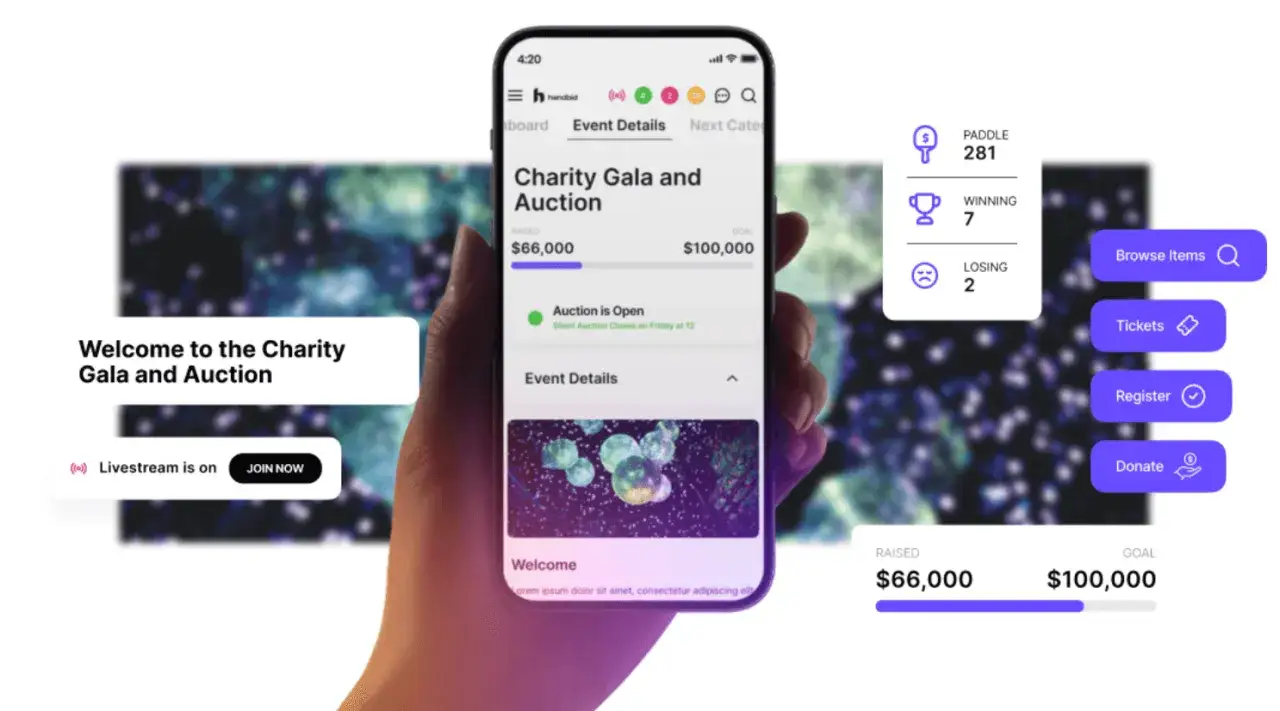
If the registration flow is clumsy, people will leave and never come back. I design the experience for a phone first, because that is where most supporters will see the auction, share it, and place their bids. The best online auction pages are not flashy; they are fast, clear, and hard to misunderstand.
At minimum, I want a platform to handle quick registration, item photos, search and filters, bid history, outbid alerts, saved payment methods, and a clean checkout screen. Proxy bidding, sometimes called max bidding, is especially useful because it lets a supporter set a ceiling once and keep participating without sitting on the page all night. Text alerts matter too, because they pull people back in when someone outbids them.
| Capability | Why it matters | Minimum standard |
|---|---|---|
| Mobile-friendly bidding page | Most bidders will use a phone, not a laptop | Fast load time and readable item cards |
| Outbid notifications | Creates urgency without manual follow-up | Email plus text if possible |
| One-tap checkout | Reduces abandonment after the auction closes | Stored cards or wallet payments |
| Proxy bidding | Keeps supporters active even when they are offline | Clear max-bid setting and transparent rules |
| Reporting and exports | Helps with receipts, follow-up, and analysis | Bidder list, totals, item winners, and payment status |
| Receipt and tax handling | Important for U.S. nonprofit operations | Separate donation, purchase, and item value records |
For budget planning, I usually split platforms into three practical bands. Light tools and transaction-based setups can work for small pilots and may stay near the low hundreds per month or less. Subscription nonprofit platforms often land around the low thousands per year. Custom or white-label builds can move into five figures quickly, especially if branding, integrations, or a standalone app are required.
That is why I tell teams to buy for the experience they actually need, not the most elaborate feature list on paper. If the platform removes friction and keeps supporters moving, promotion can do its job instead of compensating for a bad interface. When the platform feels easy, promotion can do its job instead of compensating for friction.
Launch early and promote like a campaign, not a one-day event
An online auction rarely wins on items alone. It wins when enough people see the catalog early, understand why it matters, and have a reason to come back. OneCause notes that its average Giving Center goes live about 39 days before an event, and that is close to the runway I like for a first serious auction. It gives you time to fix item pages, test payment flows, and build repeat touchpoints instead of rushing everything into the final week.
I usually promote in three waves: launch, mid-campaign, and last chance. The launch message should focus on the mission and the strongest items. The mid-campaign message should highlight new or overlooked lots. The final push should be short, urgent, and direct, with clear closing times and a reminder that supporters can still win even if they are not attending the event in person.
- Send a launch email as soon as the catalog is usable, not when every detail is perfect.
- Post item highlights on social channels with images that make the value obvious in a second or two.
- Ask board members, volunteers, and sponsors to share the auction link in their own words.
- Use a countdown in the last 48 hours so people know exactly when bidding ends.
- Feature remote participation as a benefit, especially for supporters who care about the cause but cannot attend the event.
I also like to keep a short list of “hidden gem” items and surface them again halfway through the auction. That works better than repeating the same top lot over and over, because it gives regular visitors a fresh reason to check back. After the first bids land, the final hours are where process discipline protects revenue.
Close the auction cleanly and fulfill items fast
The close is where online auctions can feel surprisingly fragile. A clear ending time, a visible countdown, and a reasonable soft-close rule reduce confusion and help prevent last-second sniping. If the platform supports it, I prefer extending an item by a couple of minutes when a late bid arrives, because that keeps the finish competitive without turning it chaotic.
Once the auction closes, I move quickly. Winners should be charged or invoiced immediately, receipts should go out automatically, and item pickup or shipping instructions should be simple enough to follow without calling staff. The longer you wait to confirm winners, the more work you create for your team and the more trust you lose with bidders.
- Lock in the ending time and explain the rules before bidding opens.
- Use soft-close or anti-sniping logic where it makes sense for the item mix.
- Process payment immediately from the saved method whenever possible.
- Send winner confirmations and nonprofit receipts the same day.
- Publish pickup, delivery, or shipping steps within 24 hours.
For U.S. events, I also advise checking how your platform handles tax-deductible contributions versus purchased items, because those are not the same thing. If you bundle event access, merchandise, and donation appeals together, your records need to stay clean. The last layer is not technical at all; it is the story and follow-through that tell people their bids mattered.
The details that make the auction feel mission-driven instead of transactional
The best online silent auctions do more than raise money. They make the mission visible at every step. When a bidder sees how their purchase supports a food pantry, a scholarship fund, a youth program, or a local service project, the item stops being just a prize and becomes a small act of participation.
That is why I always close the loop after the auction. Thank people quickly. Share what the campaign raised. Show what the funds will support. If you can, use one short result metric and one human detail, because numbers explain scale while stories explain impact.
- Track participation rate, average bids per item, conversion from viewer to bidder, and total revenue per active bidder.
- Note which item categories performed best so next year’s catalog is more intentional.
- Send a thank-you within 72 hours, not a week later.
- Reuse the same platform setup only if it still feels quick on a phone and simple at checkout.
When the platform is easy, the catalog is selective, and the mission is obvious, an online auction stops feeling like a digital version of a table full of paper bid sheets. It becomes a compact fundraising campaign with real momentum, and that is what usually turns a decent event into one worth repeating.