
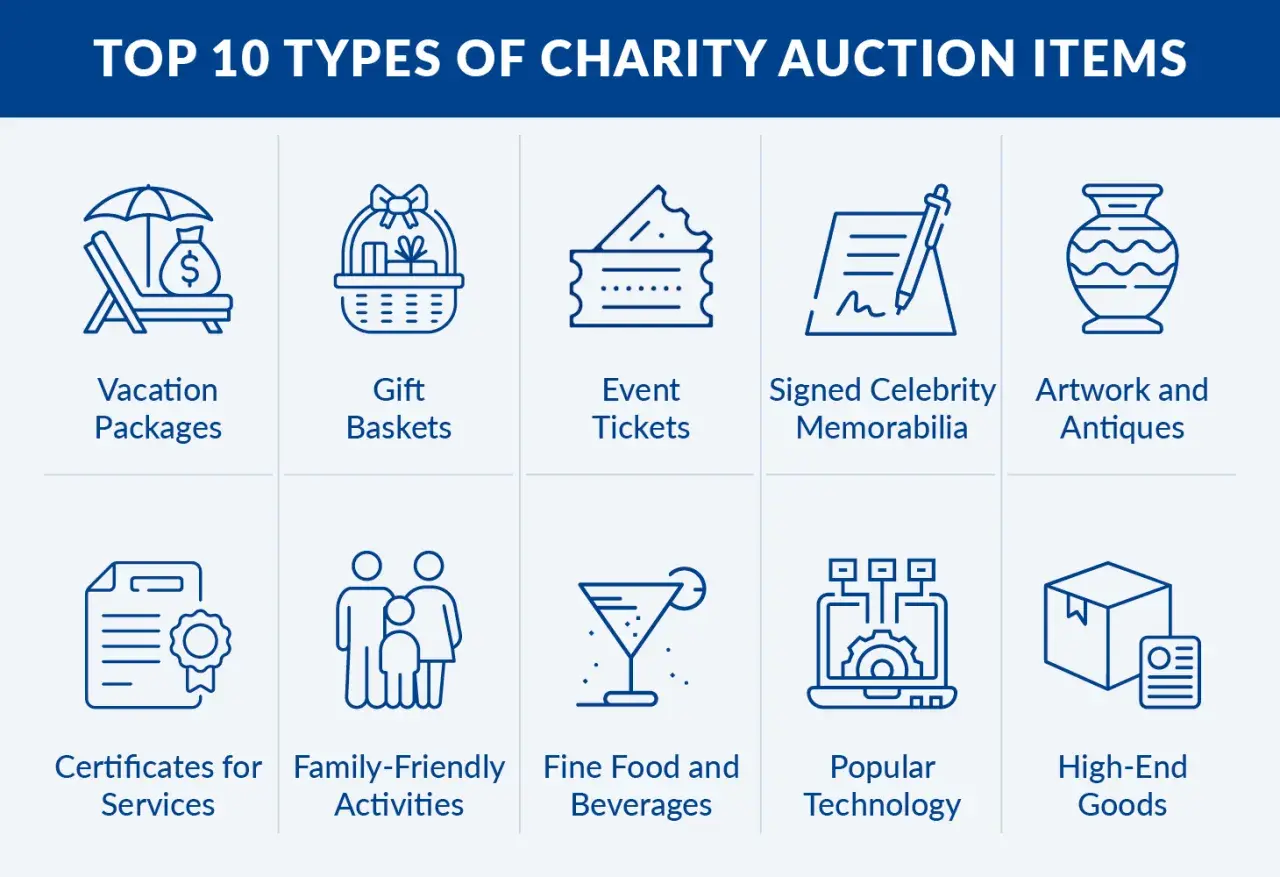
The strongest silent auctions are built on a simple idea: people bid on things that feel desirable, easy to understand, and worth taking home. I’m focusing here on the kinds of donations that actually move money at U.S. fundraisers, plus the practical details that make them easier to request, package, and redeem. If you are planning a school event, nonprofit gala, or community benefit, the right donations for silent auction tables can make the difference between polite interest and real bidding.
Quick takeaways for building a stronger auction catalog
- Lead with desirability. Experiences, useful services, and recognizable gift cards usually outperform random mixed items.
- Bundle small pieces into one story. Three to five related items in a themed lot often bid better than loose odds and ends.
- Ask specifically. A clear request for one item or service is easier for a donor to approve than a vague appeal.
- Start early. I would work 8 to 12 weeks ahead so there is time to follow up, price items, and prepare bid sheets.
- Match the catalog to the crowd. A family event, golf outing, or school gala will each respond to a different mix of donations.
What makes a silent auction donation worth bidding on
I usually judge a potential item by three questions: will people want it, can they understand it in five seconds, and is redemption straightforward? That is why a dinner certificate or a private lesson often beats a random basket full of unrelated products. A bidder should be able to glance at the lot and instantly picture how they would use it.
The best donations carry utility, status, or experience value. Utility wins when bidders can use the item immediately, status wins when the brand or rarity feels special, and experience value wins when the prize creates a memory instead of a thing. In practice, I want all three across the full catalog, not crammed into one lot.
Read Also: Inexpensive Silent Auction Ideas - Maximize Bids!
Three filters I use
- Easy to explain. If you need a long paragraph to describe it, the item is probably too complicated for a silent auction.
- Broad enough to appeal. A prize can be niche, but the best ones still connect with a visible slice of your audience.
- Simple to redeem. Clear expiration dates, pickup instructions, and blackout dates matter more than organizers usually think.
Once those filters are clear, choosing categories gets much easier, because the strongest donations are usually the ones that fit both the crowd and the logistics.

The strongest items and services to request
If I were building a catalog from scratch, I would start with items and services that are easy to value, easy to display, and easy for bidders to imagine using. Experiences and exclusive access are especially strong because they feel scarce. Services work well too, because they are often valuable to the winner while costing the donor less than a retail product.
| Category | Why it works | Best donor sources | Watch-outs |
|---|---|---|---|
| Experiences | They feel memorable and are hard to buy on a whim. | Hotels, attractions, restaurants, sports venues, local experts. | Check blackout dates, capacity limits, and expiration terms. |
| Services | They solve a real need and can be highly practical. | Photographers, salons, trainers, cleaners, tutors, designers. | Define the scope clearly so the winner knows what is included. |
| Gift cards | They are flexible, familiar, and great for lower-entry bidding. | Restaurants, retailers, coffee shops, entertainment brands. | They are safer when bundled with another item or theme. |
| Themed baskets | They create instant value when the items feel coordinated. | Board members, staff, local businesses, parent groups. | Do not let the basket look like a closet cleanout. |
| Exclusive access | Scarcity drives bids, especially when the experience cannot be copied. | Founders, community leaders, chefs, artists, behind-the-scenes hosts. | Make sure the experience is realistic to deliver. |
| Premium products | Well-known brands still pull bids because they are instantly recognizable. | Wine shops, outdoor retailers, beauty brands, specialty stores. | Plan for storage, shipping, and breakage if needed. |
A family audience will often respond best to practical items such as restaurant cards, museum passes, lessons, and household services. A corporate crowd may lean toward golf, travel, wine, and premium dining. I like to match the donor ask to the people already in the room rather than chasing generic “big value” items that do not fit the event. That way, the auction feels designed instead of assembled.
And if a donor cannot part with a physical product, a service package or experience can be just as strong when it is framed correctly. A private chef dinner, a family photo session, or a half-day business consult can generate more interest than a shelf item with a similar sticker price. The point is not to collect more stuff; it is to collect better stories.
How to package smaller items so they feel bigger
Small donations become far more attractive when they are grouped into a clear bundle. I usually think in terms of a simple formula: one anchor item plus two to four supporting pieces. That keeps the lot focused and gives bidders a ready-made story to imagine. A single gift card can feel modest; the same gift card inside a date-night package suddenly feels complete.
- Date night bundle. Combine a restaurant certificate, dessert card, and tickets to a movie, play, or local show.
- Self-care bundle. Pair a salon service with skincare products, a massage certificate, or a yoga class pass.
- Family outing bundle. Put together museum passes, lunch credit, and a game or activity for the kids.
- Home comfort bundle. Use wine, a cookbook, kitchen tools, or a cozy item to create an easy-to-imagine evening.
Three to five related pieces is usually enough. Any more than that and the lot starts to feel busy instead of valuable. I prefer a clean theme, one obvious use case, and a title that reads like something a bidder could actually enjoy this weekend. Packaging is where smaller donations start to compete like premium ones, and that matters when your catalog has to do a lot of fundraising work.
How to ask for silent auction donations without sounding generic
The ask matters as much as the item. I start with local businesses and existing supporters before I move to larger corporate programs, because the response rate is usually better and the turnaround is faster. A safe planning window is 8 to 12 weeks before the event; many companies want at least 6 weeks’ notice, and some need up to 4 months. If I wait until the last minute, I usually end up with weaker donations and more stress than necessary.
- Research fit first. Check whether the business actually donates items like the one you want, and whether it supports organizations in your area.
- Ask for one specific item. A clear request such as “two tickets to a game” or “a family tasting menu” is easier to approve than a broad appeal.
- Explain your mission in one or two sentences. Keep it concrete. Tell the donor what the fundraiser supports and why the event matters.
- State the recognition you can deliver. Mention program listings, signage, social shoutouts, or on-site recognition only if you will actually provide them.
- Give a deadline and a response path. Make it easy to reply by email, form, or phone, and set a clear return date for the item.
- Offer a fallback. If they cannot donate the requested item, invite them to support the event in another way, such as a smaller item or sponsorship.
That approach feels less like a mass solicitation and more like a real invitation to help. It also saves everyone time, because a donor can say yes, no, or suggest an alternative without guessing what you need.
What quietly hurts bidding even when the donations are good
Some auctions underperform not because the donations are weak, but because the catalog is poorly edited. Too many similar lots, vague redemption rules, and mismatched items can flatten bidder energy fast. I would rather have 30 strong items than 80 forgettable ones that nobody remembers by the end of the night.
| Mistake | Why it hurts | Better move |
|---|---|---|
| Asking too broadly | Donors have to do the thinking for you, which lowers response rates. | Request one specific item or service tied to the donor’s business. |
| Mixing too many random items | The catalog loses structure and bidders stop noticing the strongest lots. | Build themed bundles and keep the number of categories focused. |
| Ignoring redemption details | Blackout dates, pickup confusion, or vague terms create friction after the bid. | Write the expiration date, exclusions, and delivery method clearly. |
| Overpromising recognition | Future donor relationships suffer if the promised exposure never happens. | Offer only the recognition you can reliably deliver. |
| Waiting too long to solicit | Good donors are already committed elsewhere or no longer have inventory. | Begin outreach early enough to follow up and replace any no-shows. |
One mistake I see often is chasing prestige while ignoring fit. A high-value item that does not match your audience can sit there quietly while a much smaller, well-matched donation sparks a bidding war. The goal is not to impress people with the catalog; it is to make them want to bid in it.
The donation mix I would build before the first bid opens
If I were planning a U.S. community fundraiser, I would build the catalog like a staircase. The first step would be one or two anchor experiences, such as a weekend package, private dinner, or VIP access item. The middle would be services and mid-tier local experiences that feel attainable but still special. The bottom would be gift cards and themed bundles that help newer bidders join in without hesitation.- Anchor items. Aim for one standout prize that gives the room a reason to pay attention.
- Mid-tier items. Fill the center of the catalog with services, classes, tickets, and local packages people can picture using.
- Entry items. Keep a few easier, lower-cost lots so first-time bidders feel welcome instead of priced out.
That mix keeps the event moving at different budget levels, which is exactly what a healthy silent auction should do. If you want the next year to be easier, keep track of which donors said yes quickly, which items brought the most bids, and which lots were annoying to redeem. Those notes are often more valuable than the items themselves, because they tell you where to focus before the next fundraiser starts.
