
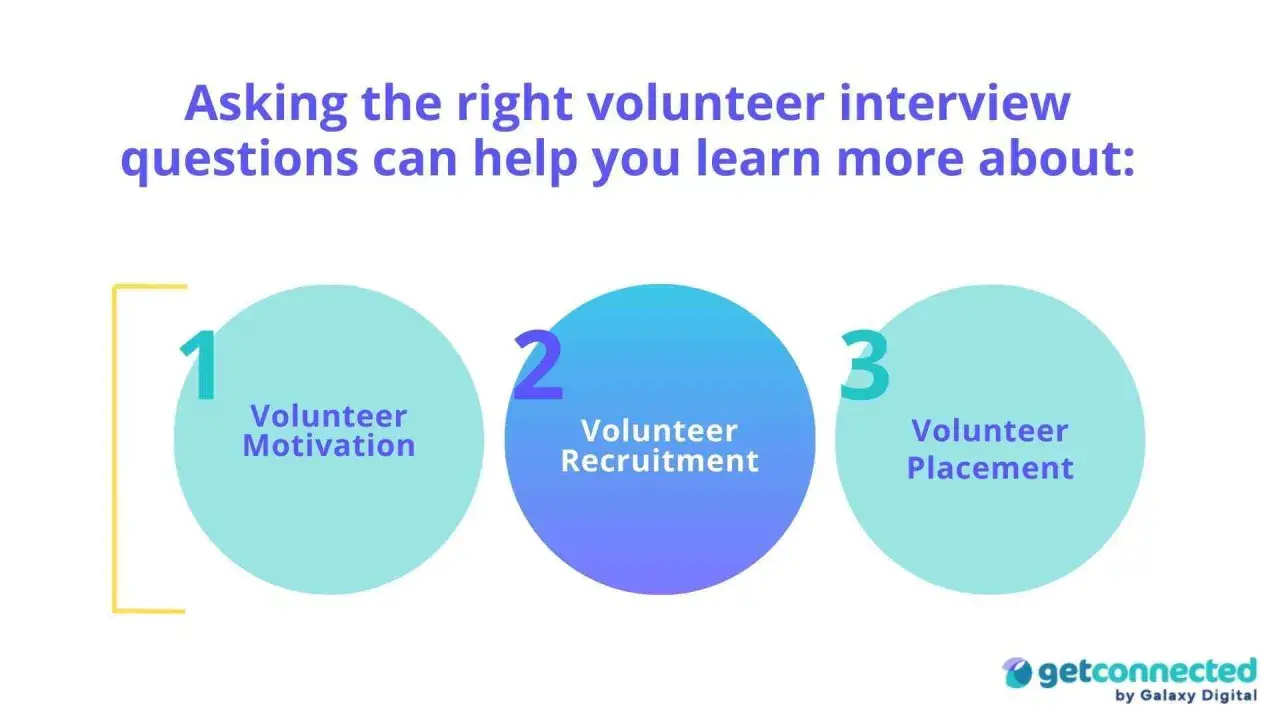
A good set of volunteer interview questions is less about interrogation and more about fit, reliability, and mission alignment. In a volunteer setting, the right conversation helps you see who can show up consistently, work safely, and represent the mission with care. Below, I lay out the questions I would ask, how I would adapt them to different roles, and how I decide whether to move someone forward.
What matters most in a strong volunteer interview
- Start with motivation, then test for availability, boundaries, and role fit.
- Use open-ended prompts so you can hear how the person thinks, not just what they want you to hear.
- Match the question set to the risk level of the role, especially when children, clients, money, or sensitive data are involved.
- Look for honest limits and realistic commitment, not polished enthusiasm alone.
- Keep the interview short and respectful, then end with clear next steps and training expectations.
What a strong volunteer interview is meant to uncover
When I interview a volunteer candidate, I am not trying to build a perfect personality profile. I want to answer a few practical questions fast: Will this person show up? Can they do the work safely? Do they understand what the role really requires? That is especially important in the United States, where volunteer programs often rely on small teams and cannot afford mismatched placements that create friction for staff or other volunteers.
The best interviews uncover five things: motivation, availability, comfort with the task, willingness to follow direction, and the ability to work within boundaries. That last point matters more than many organizations admit. A volunteer can care deeply about a cause and still be wrong for a role if they cannot handle repetition, confidentiality, or structure. I would rather place someone accurately than politely approve the wrong fit.
Once you know what the interview is supposed to reveal, the actual questions become much easier to choose.

The core questions I ask every volunteer candidate
I prefer a small number of open-ended questions over a long script. The goal is not to trap anyone; it is to get enough evidence to make a responsible placement decision. These are the questions I come back to most often.
| Question | Why I ask it | What a strong answer sounds like |
|---|---|---|
| What brought you to this organization specifically? | Checks mission alignment and whether the interest is genuine. | The person can name a program, value, or community outcome they care about. |
| What kind of volunteer work feels like a good fit for you? | Helps me understand strengths, preferences, and limits. | The answer is specific, not just “anything.” |
| How much time can you realistically commit over the next 8 to 12 weeks? | Tests reliability and prevents overbooking. | The candidate gives a realistic number of hours or shifts. |
| Which days, times, or formats are off-limits for you? | Clarifies scheduling before anyone is placed. | The candidate is direct about constraints and does not guess. |
| Tell me about a time you had to stay dependable for a group or project. | Reveals follow-through, not just intent. | The example includes a concrete responsibility and outcome. |
| How do you respond when a task is repetitive, slower than expected, or less glamorous than you hoped? | Shows whether they can handle real volunteer work, not just the idea of it. | The answer shows patience and flexibility. |
| What support or training would help you do your best work here? | Identifies learning needs and reduces early frustration. | The person can name practical support, such as orientation or shadowing. |
| Are there any accommodations or boundaries we should plan for? | Protects safety and helps with realistic placement. | The answer is honest and focused on what makes the role workable. |
| What questions do you have for me? | Lets me see whether they are thoughtful and engaged. | They ask about expectations, training, impact, or schedule. |
That last question is not a throwaway. A candidate who asks about training, supervision, or the day-to-day rhythm of the role is usually thinking like a partner, not a passerby.
How to adapt the interview to the role
Not every volunteer role deserves the same interview. A one-time event helper, a youth mentor, and a remote grant-writing volunteer have very different risk profiles. I adjust the questions based on what could go wrong if the placement is off.
| Role type | Extra questions I would ask | Why it matters |
|---|---|---|
| Youth or vulnerable-adult support | How do you keep boundaries? What would you do if someone shared something concerning with you? | These roles require judgment, calm, and a clear understanding of reporting lines. |
| Event-day or physical support | Can you stand for 2 hours? Can you lift 20 pounds? Are you comfortable with fast changes on the day? | Practical capacity is more important than enthusiasm here. |
| Remote admin or communications | What tools do you already use comfortably? How quickly can you usually respond to messages? | Remote work depends on responsiveness and baseline tech confidence. |
| Recurring team or leadership roles | How do you handle conflict? How do you respond when someone misses a commitment? | These volunteers shape the experience of everyone around them. |
In practice, I keep the interview focused on the actual work. If the role involves children, money, health information, or transportation, I ask more carefully about trust, supervision, and routine. If the role is low-risk and short-term, I keep it lighter and move faster.
How I read the answers without getting fooled by good intentions
Some candidates sound impressive because they are passionate. Passion helps, but it is not the same as readiness. I listen for evidence that the person understands the assignment, not just the cause.
| Signal | What it usually means | What I do next |
|---|---|---|
| Specific examples with dates, tasks, or time commitments | The person has real experience, not just vague interest. | I usually move them forward. |
| Honesty about limits | The person is more likely to be dependable than someone who overpromises. | I look for a role that fits the limits instead of pushing past them. |
| Only speaking in slogans about helping people | The motivation may be real, but it is still untested. | I ask follow-up questions about time, tasks, and expectations. |
| Dismissiveness about training or rules | Potential mismatch, especially in safety-sensitive roles. | I slow the process down or redirect them to a different role. |
| Asking thoughtful questions back | They are taking the role seriously. | I usually see this as a positive sign. |
| Unclear answers about schedule or commitment | Higher risk of no-shows or early drop-off. | I ask for a concrete commitment before proceeding. |
I do not penalize nerves. A lot of good volunteers are simply unfamiliar with interviewing. What matters is whether the answers become clearer when I ask a second time. If someone cannot get specific after a few prompts, I treat that as useful information, not a failure.
A simple interview flow that respects both sides
A volunteer interview does not need to feel heavy. For a standard role, I usually aim for 20 minutes. For anything involving vulnerable people, confidential information, or real safety concerns, I extend it to 30 to 45 minutes and leave room for follow-up screening.
- Start with a 2 to 3 minute welcome and role snapshot.
- Spend about 5 minutes on motivation and connection to the mission.
- Use 5 minutes for schedule, access needs, and logistics.
- Reserve 5 to 10 minutes for situational questions tied to the role.
- Leave 3 to 5 minutes for the candidate’s questions.
- Close with the next step, the timeline, and any training requirements.
I also keep a short note after each conversation: fit, availability, support needs, and any follow-up action. That tiny habit helps a lot when you are juggling many applicants and trying to place people thoughtfully rather than quickly.
The final pass before you say yes
Before I approve a volunteer, I do one last check: Does the role match the person’s time, temperament, and skill level, or am I hoping enthusiasm will cover a gap? In most cases, the best decision is not an enthusiastic yes or a hard no. It is a better placement.
If someone is motivated but inexperienced, I would often start them in a simpler support role, pair them with a clear orientation, and review after the first shift or two. That approach protects the organization and gives the volunteer a better first experience, which is where retention actually begins.
The strongest volunteer programs do not just ask the right interview questions; they use the answers to place people where they can genuinely help. That is how you get fewer no-shows, better morale, and volunteers who stay long enough to matter.
