
The strongest online auctions are simple to browse, easy to bid on, and fast to close.
- Set one revenue target, one audience, and one closing date before collecting items.
- Pick a platform with mobile bidding, secure payments, and automatic invoicing if you want less manual work.
- Lead with 15-30 strong items instead of a long catalog of weak ones if you are starting small.
- Use clear rules for bid increments, shipping, pickup, and tax disclosures before the auction opens.
- Promote the auction in short bursts across email, social, text, and sponsor channels.
- Follow up within 24 hours so payments, receipts, and thank-yous do not stall.
Start with the result you need, not the number of items you can collect
I usually begin with one question: what number would make this event worth the effort? If you do not define the target early, the auction can drift into a collection project instead of a fundraising campaign. A strong first auction can be modest in size and still succeed if the items are relevant, the audience is engaged, and the checkout flow is clean.
For planning, I like to think in practical bands rather than rigid rules. A small community auction can work with 15-25 strong lots, a mid-size nonprofit auction often needs 30-60 items, and a larger campaign auction may support 60-120 lots if promotion is strong and the bidder base is wide enough. The point is not to maximize item count; it is to match the catalog to the attention span of your audience.| Event size | Typical goal | Item count | Prep window | Best fit |
|---|---|---|---|---|
| Small community auction | $2,000-$10,000 | 15-25 items | 6-8 weeks | PTAs, clubs, neighborhood groups |
| Mid-size nonprofit auction | $10,000-$50,000 | 30-60 items | 8-12 weeks | Local nonprofits with active email lists |
| Large campaign auction | $50,000+ | 60-120 items | 12-16 weeks | Galas, annual campaigns, sponsorship-backed events |
These are planning bands, not laws. If your audience is highly loyal, a tighter catalog can outperform a bigger one because bidders are not distracted by filler. Once the target is clear, the next decision is which platform will carry the experience without creating extra admin work.
Choose the platform and rules before you ask for donations
In 2026, a mobile-first auction is the baseline, not the upgrade. People expect to register, bid, and pay from a phone in a few taps, and if your setup makes that hard, you will lose energy right where you need it most. I would rather have a slightly smaller auction on a reliable system than a larger auction held together with spreadsheets and manual reminders.
| Option | Best when | Strengths | Trade-offs |
|---|---|---|---|
| Dedicated auction software | You want mobile bidding, automated invoices, and donor data in one place. | Best bidder experience, less manual work, cleaner checkout. | Usually costs more and takes a little setup. |
| General event platform | You need registration plus a simple auction. | Good for basic ticketing and branding. | Often weaker on live bidding, reminders, and lot management. |
| Manual setup | The event is very small and internal. | Low software cost and flexible. | Easy to break, hard to scale, and painful at close time. |
What I look for first is simple: mobile bidding, outbid alerts, secure payment capture, easy donor registration, and reporting that can be exported without a fight. If the platform cannot handle those basics cleanly, the rest of the auction will feel harder than it should. Once the mechanics are set, the real work shifts to the items themselves, because that is where attention is won or lost.

Build a catalog people actually want to browse
This is the part where strategy matters more than volume. A good online catalog needs a mix of items that feel useful, scarce, and emotionally connected to your mission. I usually want three price bands: easy-entry items under $100, mid-tier lots between $100 and $500, and a smaller set of premium items above $500. That mix gives more bidders a reason to participate without making the auction feel repetitive.
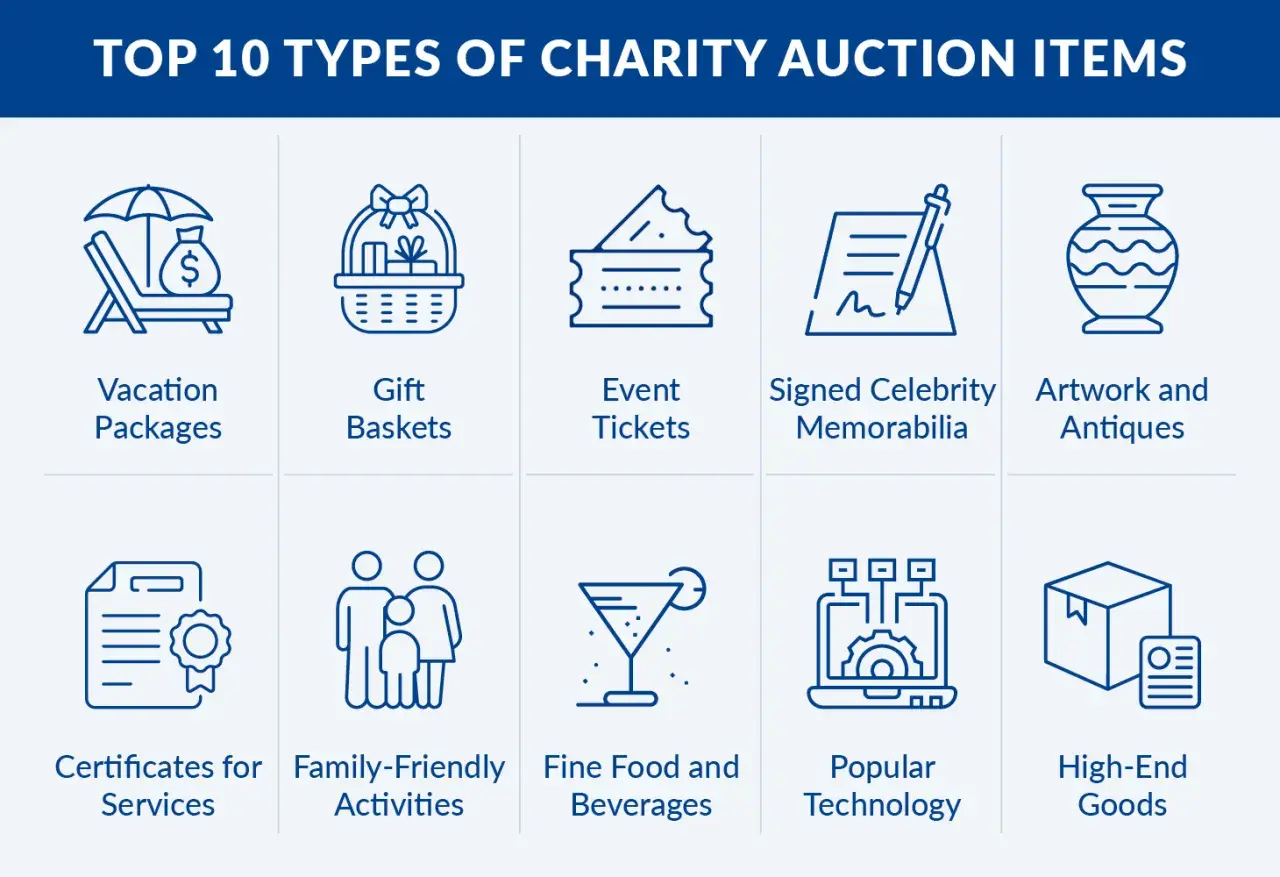
The best lots are often not the most expensive ones. Experiences usually do well, especially private dinners, local classes, behind-the-scenes access, family outings, and service packages that save people time. If donated goods are small on their own, I prefer to bundle them into themed packages that tell a story, such as a family movie night, a weekend wellness package, or a neighborhood gift card bundle.
- Use one strong hero photo and keep the background simple.
- Write a description that says what the item is, who it suits, and why it matters.
- Add expiration dates, blackout dates, and pickup restrictions in plain language.
- Set opening bids with intention. For desirable items, I often start around one-third to one-half of fair market value and adjust based on demand.
- Choose bid increments that feel natural, such as $5 for lower-priced items and $10-$25 for higher-value lots.
A clean item page does more for bidding than a long paragraph of promotional language. If the photo is weak, the title is vague, or the restrictions are hidden, bidders hesitate. If the lot is simple to understand and clearly tied to your mission, people move faster. That brings us to the rules, because even a great catalog can still stumble if the close process is unclear.
Write the rules before bidding opens
This is the section most teams treat as boring, and it is where preventable mistakes live. I tell teams to write the rules as if a stranger will read them on a phone at the last minute, because that is exactly what happens when the auction gets busy.
| Rule | Why it matters |
|---|---|
| Closing time and time zone | It prevents confusion for remote bidders. |
| Bid increment | It keeps bidding readable and stops tiny jumps that frustrate users. |
| Payment method | It reduces failed checkouts when the auction ends. |
| Pickup or shipping policy | It avoids abandoned lots and awkward follow-up. |
| Tax disclosure | It helps U.S. supporters understand what part, if any, is deductible. |
Once the rules are clear, promotion becomes much easier because you are not trying to explain the mechanics and sell the event at the same time.
Promote it like a campaign, not a one-day event
The strongest online auctions build momentum before bidding starts. I prefer a short warm-up period rather than a rushed launch, because people need time to hear the story, preview the items, and decide whether they want to compete. The most effective campaigns usually combine email, social posts, a sponsor push, and a few well-timed reminders.
| Timing | What to send | Why it works |
|---|---|---|
| 3-4 weeks before opening | Teaser email and save-the-date | Builds anticipation without exhausting the list |
| Launch day | Full catalog link and bidding instructions | Converts warm supporters while attention is highest |
| 72 hours before close | Deadline reminder | Reactivates people who meant to bid later |
| Final 2 hours | Urgency message | Captures late bids and near-misses |
I usually see the best response from a preview email that highlights 6-10 headline lots instead of dumping the full catalog into one message. A short vertical video of the strongest item often performs better than polished graphics because it feels real and immediate. If you use text messaging, keep it tight and purposeful: reminders, outbid notices, and final-close alerts are useful; generic blasts are not.
The job of promotion is not just to get eyes on the auction. It is to get the right people emotionally ready to act before the clock starts running out.
Close fast and follow through before enthusiasm fades
The auction is not finished when the final bid lands. The post-close window is where money is actually collected, supporters are thanked, and your team decides whether the event felt smooth or chaotic. I like to assign one person to payment exceptions and one person to item fulfillment so that the entire team is not solving the same problem at once.
| Window | Action |
|---|---|
| Within 1 hour | Confirm the close, freeze edits, and check for failed payments. |
| Within 24 hours | Send invoices, receipts, and thank-yous. |
| Days 2-7 | Arrange pickup, shipping, or digital delivery. |
| Week 2-4 | Review metrics, steward top bidders, and document lessons for next time. |
The metrics I care about most are total revenue, bidder count, average bid, payment completion rate, and which lots pulled the most interest. If a lot had traffic but no winning bids, the problem may be the price, the photo, or the story. If people won but checkout was slow, the problem is operational. That distinction matters, because it tells you what to fix next instead of guessing.
What I would improve before the next auction goes live
If I were reviewing the first run of an online auction, I would not start by asking how to add more items. I would ask which lots pulled people in, where bidders hesitated, and which messages actually produced clicks. Those answers usually show you the fastest path to better results.
In practice, the next auction gets stronger when you keep the winning categories, retire weak items, shorten the bidder journey, and make every step easier on a phone. For a community-impact organization, that also means keeping the mission visible at every turn, because bidders respond better when they understand what their purchase helps fund. If you want one rule to keep in mind, it is this: a focused catalog, a clear story, and a checkout process that works cleanly will usually outperform a bigger, messier auction.
